Introduction
Have you ever felt like your iman needs a boost, but you just don’t know where to start?
Most of us have been there. We make big promises to ourselves I’ll pray every prayer on time, I’ll finish the Quran this month, I’ll be a better Muslim starting today. And then life happens. Work piles up. Kids need attention. The days blur together.
Here’s the truth that many Muslims don’t realize: you don’t need a massive overhaul to grow closer to Allah. The secret lies in daily Islamic habits small, consistent actions that gradually reshape your character, your routine, and your relationship with your Creator.
This article walks you through 25 powerful yet practical Islamic habits that any Muslim can build, whether you’re a student, a busy parent, a working professional, or someone just beginning their journey back to the deen. You don’t have to do all 25 at once. Start with one. Then add another. Watch your life quietly transform, one habit at a time.
Why Small Islamic Habits Matter More Than Big Occasional Actions
We often think that transformation requires grand gestures. Finishing the entire Quran in Ramadan. Praying Tahajjud every night. Giving a large amount to charity. These are beautiful acts, but they’re not what builds a lasting Islamic life.
“The most beloved deeds to Allah are those that are consistent, even if they are small.” — Sahih al-Bukhari 6464 | Sahih Muslim 783
The Prophet Muhammad ﷺ taught us this principle clearly. Allah loves the deed you do every day, even if it’s reading just one page of the Quran or saying SubhanAllah ten times before bed. Why? Because consistency is a sign of sincerity. It shows you genuinely mean it, not just when the mood strikes.
Neuroscience actually agrees. Habits are formed through repetition. The brain builds new pathways when you repeat an action consistently. Over weeks and months, a small habit becomes automatic, effortless, and part of who you are.
So instead of waiting for the ‘perfect time’ to become a better Muslim, let’s start today with these 25 daily Islamic habits.
25 Daily Islamic Habits That Can Change Your Life
1. Pray Fajr on Time
Fajr is more than just the first prayer of the day. It’s a declaration that your day belongs to Allah before it belongs to anything else. The Prophet ﷺ said the two units of Fajr are better than the world and everything in it (Sahih Muslim 725).
Waking up for Fajr trains discipline, gratitude, and focus. It sets the spiritual tone for every hour that follows. Set a consistent alarm, sleep early, and try to maintain wudu from the night before to make the morning easier.
2. Read One Page of the Quran Daily
One page. That’s all. It takes less than five minutes, but over a year it adds up to an entire juz or more. The Quran is your direct connection to Allah’s words. Reading it daily keeps that line open.
‘Recite the Quran, for it will come as an intercessor for its companions on the Day of Resurrection.’ (Sahih Muslim 804). Pick a consistent time after Fajr works beautifully and make it non-negotiable.
3. Read the Quran With Understanding
Reading is wonderful. Understanding is transformative. When you know what Allah is actually saying to you, the Quran stops being a ritual and becomes a living conversation.
Even reading a tafsir of just one ayah per day changes how you see the world. Use a trusted translation alongside your recitation. The meanings will stick to your heart in ways that bare recitation sometimes cannot.
4. Make Morning Adhkar
The morning adhkar are a spiritual shield. They include phrases of remembrance, seeking Allah’s protection, and expressing gratitude all condensed into about ten minutes. The Prophet ﷺ himself never skipped them.
Recite: ‘Alhamdulillahilladhi ahyana ba’da ma amatana wa ilayhin nushur’ upon waking. Follow with the established morning supplications from Hisnul Muslim. You’ll feel a calm settle over your morning that nothing else quite replicates.
5. Make Evening Adhkar
Just as you protect your morning, protect your evening. The evening adhkar seal your day with remembrance and gratitude. They include Ayatul Kursi, the last two verses of Surah Al-Baqarah, and specific duas of protection.
Think of them as putting your spiritual armour on before the night. Recite them consistently after Asr or Maghrib, and you’ll notice a peace at night that was missing before.
6. Make Dua After Every Salah
The moments after salah are among the most powerful times for dua. You’ve just spoken to Allah. Your heart is open. Don’t rush away. Sit for even two minutes and sincerely ask for forgiveness, for guidance, for your loved ones, for the ummah.
The Prophet ﷺ said: ‘The closest that a servant is to his Lord is when he is in prostration, so increase your supplications therein.’ (Sahih Muslim 482). Don’t let these golden moments pass unused.
7. Say Astaghfirullah Regularly
We all make mistakes, big and small. Seeking forgiveness regularly isn’t pessimism it’s wisdom. The Prophet ﷺ used to seek forgiveness more than seventy times a day, and he was the most beloved to Allah of all creation.
Make it a habit during idle moments. Waiting in a queue, driving, washing dishes say Astaghfirullah with sincerity. It softens the heart, removes worry, and opens doors of provision that you can’t even see yet.
8. Send Durood Upon Prophet Muhammad ﷺ
Sending salawat upon the Prophet ﷺ is one of the most rewarding habits you can build. ‘Whoever sends one blessing upon me, Allah will send ten blessings upon him.’ (Sahih Muslim 408).
Say ‘Allahumma salli ala Muhammad wa ala ali Muhammad’ at least ten times a day. Before sleeping, after salah, when you hear his name make it a reflex.
9. Smile and Spread Kindness
It costs nothing and means everything. The Prophet ﷺ said: ‘Your smile for your brother is a charity.’ (Jami’ at-Tirmidhi 1956). In a world full of harshness, being a Muslim who smiles, speaks gently, and treats others with warmth is a profound act of worship.
Challenge yourself: smile at three people you interact with today. Hold the door. Ask someone how they really are. Small acts of kindness build communities and fill your scale of good deeds quietly and steadily.
10. Drink Water and Say Bismillah
This one sounds simple. That’s exactly the point. Saying Bismillah before eating or drinking is a Sunnah that turns an ordinary act into worship. It trains mindfulness and reminds you that everything every sip, every bite is a gift from Allah.
Extend this: say Bismillah before everything. Before starting work. Before driving. Before cooking. Watch how your relationship with daily life begins to feel sacred rather than mundane.
11. Learn One New Islamic Lesson Daily
Islam is vast and beautiful. There is always something new to learn, and the Prophet ﷺ called seeking knowledge an obligation upon every Muslim. You don’t need to attend a madrasa daily to grow.
Listen to a five-minute Islamic podcast during your commute. Read one hadith each morning. Follow a reliable scholar online. The key is consistency. One lesson a day is 365 lessons by year’s end, and that is genuinely life-changing.
12. Limit Unnecessary Screen Time
This is a modern test that our grandparents didn’t face. Endless scrolling through social media doesn’t strengthen the soul it depletes it. Hours vanish, and we’re left feeling empty, anxious, or envious.
Set a realistic screen time limit. Use that reclaimed time for Quran, dhikr, or even quality time with family. You’ll be surprised how much mental clarity returns when the noise quiets down.
13. Avoid Gossip and Backbiting
The Prophet ﷺ described backbiting as eating the flesh of your dead brother (Quran 49:12). It’s a sin we often underestimate because it feels social, even harmless. But it damages relationships, corrupts the heart, and transfers our good deeds to those we’ve wronged.
Before speaking about someone, ask: Is it true? Is it necessary? Is it kind? If the answer is no, remain silent. The tongue is the most dangerous tool you carry.
14. Practice Gratitude Every Day
Allah says: ‘If you are grateful, I will surely give you more.’ (Quran 14:7). Gratitude isn’t just a feeling it’s an act of worship that actively increases your blessings.
Every evening, write down or mentally name three things you’re grateful for. They don’t have to be big. Clean water. A working body. Someone who loves you. Gratitude rewires your perspective from lack to abundance.
15. Give Charity Regularly
Charity doesn’t extinguish wealth; it multiplies it. The Prophet ﷺ said: ‘Charity does not decrease wealth.’ (Sahih Muslim 2588). Even giving one dirham a day the equivalent of a small coffee is an act that shields you, purifies your income, and benefits others in ways you may never fully know.
Set up an automatic monthly donation to a trusted charity. Keep some coins in your car for those in need. Make giving a reflex, not an afterthought.
16. Make Dhikr While Walking or Driving
Your commute is time. Don’t waste it on mindless scrolling or news that disturbs your peace. Use those minutes for SubhanAllah, Alhamdulillah, Allahu Akbar. Or listen to Quran. Or repeat Astaghfirullah.
The Prophet ﷺ said Allah is pleased with a servant who says Alhamdulillah even while eating or drinking (Sahih Muslim 2734). There is no moment too small for remembrance of Allah.
17. Sleep With Wudu
This is a simple Sunnah with deep spiritual benefits. ‘When you go to bed, perform wudu as you would for prayer.’ (Sahih al-Bukhari 247). Sleeping in a state of purity means you are in a blessed state should you pass away at night.
It also trains the body and mind toward cleanliness and intentionality. Many Muslims who adopt this habit report better sleep and a calmer spirit at night.
18. Read Ayatul Kursi Daily
Ayatul Kursi (Quran 2:255) is the greatest verse in the Quran. Reciting it after every obligatory prayer brings you under Allah’s protection until the next prayer. Reciting it before sleeping grants a guardian from Allah throughout the night (Sahih al-Bukhari 2311).
Memorize it if you haven’t. Read it with understanding. It is a pillar of daily Islamic protection that is accessible to every Muslim in under thirty seconds.
19. Recite the Last 3 Surahs Before Sleeping
Surah Al-Ikhlas, Al-Falaq, and An-Nas. The Prophet ﷺ used to recite them three times each before sleeping, blow into his hands, and wipe over his body (Sahih al-Bukhari 5017). They are a comprehensive shield against harm, envy, and evil.
This takes under two minutes. Yet it closes your night with the name and protection of Allah. Make it the last thing before your eyes close.
20. Teach One Islamic Lesson to Your Children
Your greatest legacy is not your career or your bank account it’s the iman of your children. One small lesson a day, consistently, shapes entire futures. Tell a story from the Seerah. Explain the meaning of an ayah. Practice a dua together.
Children absorb more than we realize. What seems small to us becomes the foundation of their deen. There is no sadaqah jariyah ongoing charity greater than a righteous child.
21. Listen to the Quran Daily
Not everyone can read Arabic fluently yet. But everyone can listen. Turn on a recitation by a gifted qari while cooking, exercising, or getting ready for work. The Quran has a way of entering the heart through the ears even when the mind is occupied elsewhere.
Regular listening also helps with memorization, pronunciation, and developing an emotional connection with the words of Allah. Try starting with familiar surahs and expanding from there.
22. Make Sincere Tawbah Every Night
Before sleep, spend a few minutes in honest self-reflection. What did I do wrong today? Who did I hurt? Where did I fall short? Then sincerely ask Allah’s forgiveness.
Allah says: ‘Indeed, Allah loves those who constantly repent.’ (Quran 2:222). Nightly tawbah is spiritual hygiene. It keeps your heart clean, your conscience clear, and your relationship with Allah honest and real.
23. Protect Your Tongue
The Prophet ﷺ said: ‘Whoever can guarantee me what is between his two lips and what is between his two legs, I guarantee him Paradise.’ (Sahih al-Bukhari 6474). The tongue can build empires or destroy them.
Before speaking, pause. Is this true? Is it useful? Will it bring peace or conflict? Train yourself to choose silence over unnecessary words. This single habit can revolutionize your relationships, your reputation, and your akhirah.
24. Make a Daily Quran Learning Schedule
Beyond reading, there is learning. Tajweed. Memorization. Tafsir. These are skills that deepen your relationship with the Quran beyond what surface reading alone can offer. Building a small daily schedule even fifteen minutes creates remarkable results over months.
The Prophet ﷺ said: ‘The best of you are those who learn the Quran and teach it.’ (Sahih al-Bukhari 5027). Every fifteen minutes you invest in learning the Quran is an investment that pays returns in this life and the next.
25. End Your Day by Thanking Allah
Before you close your eyes, whisper: Alhamdulillah. Thank Allah for today for the breath, the food, the loved ones, the tests that made you stronger. Gratitude at the end of the day seals it with peace.
The Prophet ﷺ used to say: ‘O Allah, You are my Lord, there is no god but You. You created me and I am Your slave.’ (Sahih al-Bukhari 6306). End every day as a servant who is grateful, not just someone who survived another twenty-four hours.
How Busy Muslims Can Stay Consistent
Consistency is the bridge between intention and transformation. Here’s how different groups can stay on track:
For Students
- Keep a small habit tracker in your notebook or phone.
- Combine studying and dhikr say Astaghfirullah between chapters.
- Join an online Quran class that fits your timetable.
- Make Fajr your non-negotiable morning alarm, not just your prayer.
For Parents
- Build habits alongside your children it reinforces both.
- Use car rides for Quran listening as a family routine.
- Pray together when possible, even one salah a day as a unit.
- Read Islamic bedtime stories to children instead of screen time.
For Professionals
- Attach dhikr to existing habits dhikr during your morning commute.
- Set phone reminders for adhkar at sunrise and sunset.
- Use lunch breaks for one page of Quran or a five-minute Islamic lesson.
- Pray Dhuhr and Asr at work even two minutes changes the energy of your day.
The golden rule: never miss twice. If you skip a habit one day, come back the next without guilt or drama. Progress, not perfection, is the Islamic standard.
How Quran Learning Can Become a Daily Habit
For many Muslims, the Quran feels distant either because they never learned to read it properly, or because life got in the way. But learning the Quran doesn’t have to be overwhelming. It just needs to be consistent.
Starting with the Noorani Qaida Course is one of the most effective ways for beginners and children to learn to read Arabic from scratch. It builds the foundation of letter recognition, vowels, and basic rules in a structured, step-by-step way.
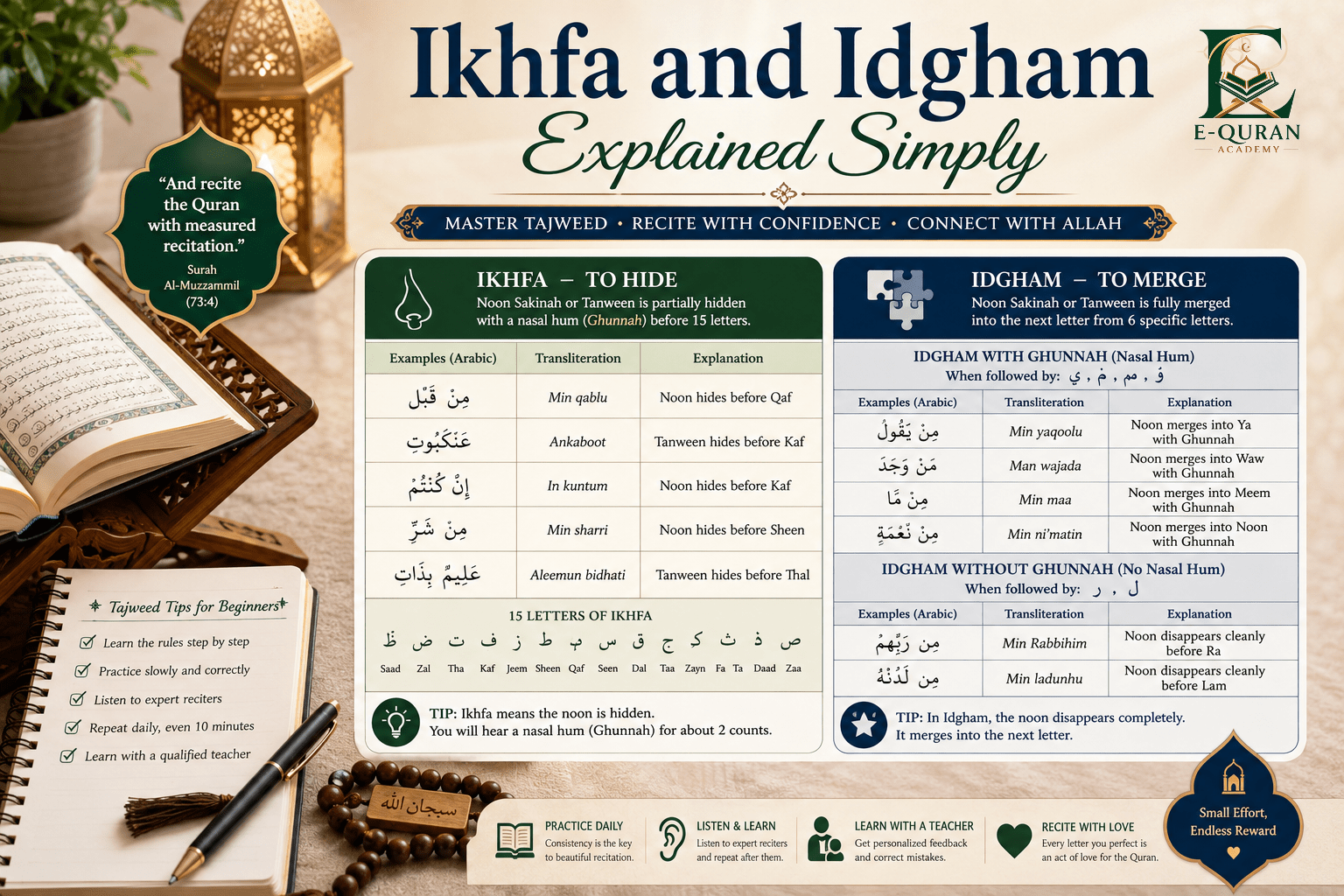
Once reading is established, Quran Reading With Tajweed helps students recite the way the Prophet ﷺ himself recited with proper pronunciation, rhythm, and beauty. Tajweed isn’t just about correctness; it deepens your emotional experience of the Quran.
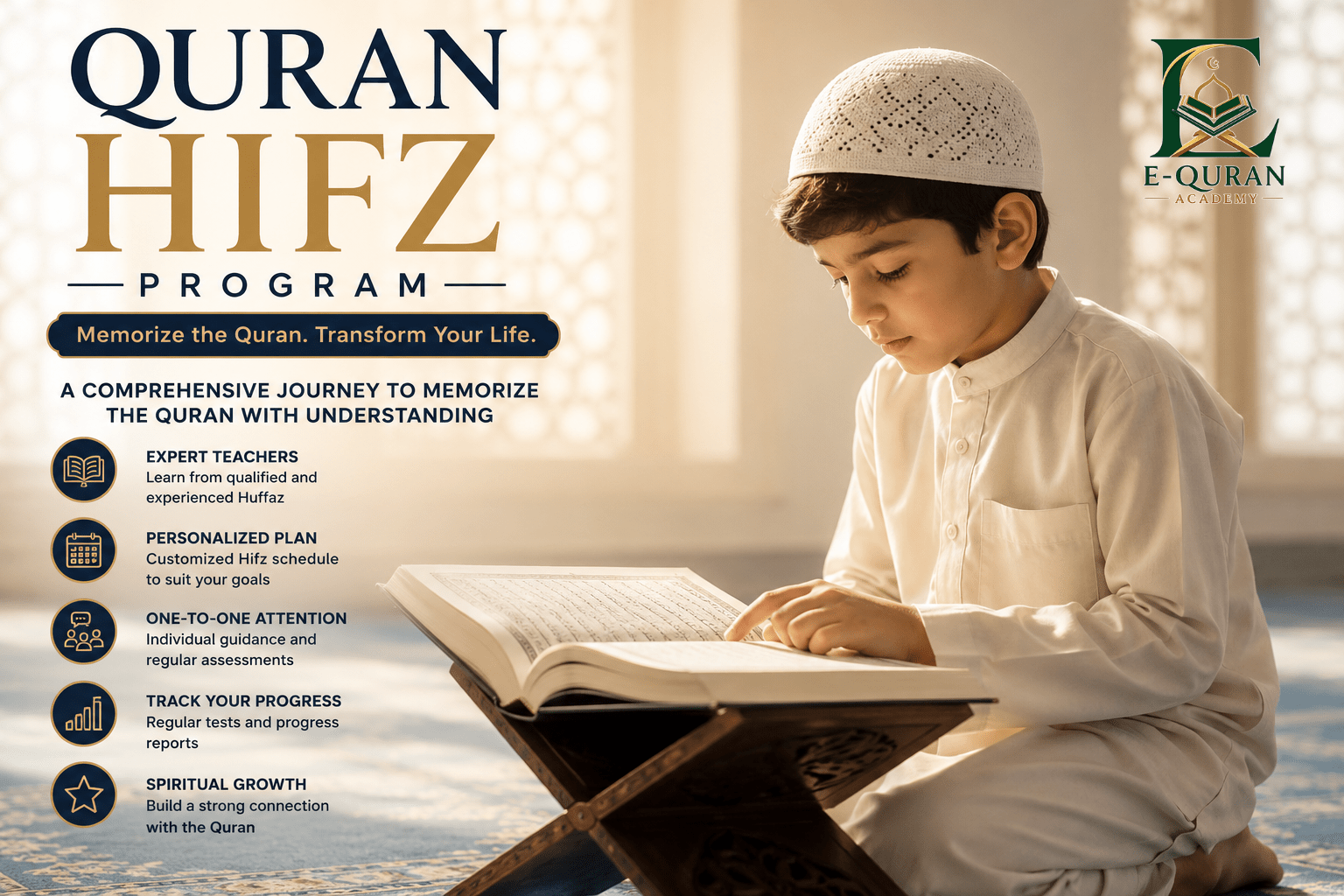
For those with a bigger dream, the Hifz Program offers structured memorization that, when supported by daily habits, can lead to carrying the entire Quran in your heart. Even memorizing one short surah a month is Hifz.
Platforms offering Online Quran Classes have made all of this accessible from anywhere in the world. Whether you’re in London, Toronto, Houston, or Sydney, you can Learn Quran Online with qualified teachers who adapt to your schedule.
E Quran-Academy is one such platform focused on helping Muslims of all ages, from young children to adults, build a genuine, lasting connection with the Quran through expert teaching and consistent learning. The goal isn’t just to read better; it’s to live the Quran.
A Simple Daily Islamic Routine Example
You don’t need a complex system. Here’s a gentle, realistic routine from Fajr to bedtime:
Morning (Fajr Time)
- Wake up, make wudu, pray Fajr on time
- Recite morning adhkar (10 minutes)
- Read one page of Quran with meaning
- Make personal dua
During the Day
- Say Bismillah before eating, drinking, starting work
- Pray Dhuhr and Asr on time even a short break at work
- Listen to Quran or a short Islamic lecture during commute
- Make dhikr in idle moments (queues, walks, waits)
Evening (Maghrib Time)
- Pray Maghrib on time
- Recite evening adhkar
- Teach children one small Islamic lesson
- Spend time in family connection, free from screens
Night (Before Sleep)
- Pray Isha on time
- Recite Ayatul Kursi and the last 3 surahs
- Make sincere tawbah reflect on your day honestly
- Say Alhamdulillah and sleep with wudu
This routine isn’t about being perfect. It’s about being intentional. Even five of these practices, done daily, will create a life that feels more purposeful, more peaceful, and more connected to Allah.
Conclusion
You’ve just read 25 daily Islamic habits. Don’t let the number overwhelm you. You don’t have to start all 25 tomorrow.
Pick one. Just one. The habit that spoke to your heart most. Do it tomorrow. Do it the day after. Do it until it becomes part of you. Then add another.
The Prophet ﷺ didn’t transform Arabia overnight. He built the greatest ummah in history one moment, one action, one person at a time. Your transformation works the same way.
Allah doesn’t need grand gestures. He wants your sincere, consistent heart showing up in the quiet Fajr, the whispered dua, the page of Quran, the gentle smile. He sees every single one.
“Indeed, Allah does not allow the reward of the doers of good to be lost.” Quran 9:120
Start today. Right now. With one small step. And trust that Allah will take you the rest of the way. In sha Allah.
Frequently Asked Questions (FAQs)
What are good daily Islamic habits?
Good daily Islamic habits include praying all five prayers on time, reading at least one page of the Quran, making morning and evening adhkar, sending salawat upon the Prophet ﷺ, saying Astaghfirullah regularly, avoiding backbiting, and ending each night with gratitude and sincere repentance. Starting with even two or three of these habits consistently is more valuable than attempting all at once.
How can I become a better Muslim daily?
Becoming a better Muslim isn’t a destination it’s a daily direction. Focus on your salah first, then add Quran reading, then build dhikr into your routine. Seek Islamic knowledge consistently, protect your tongue, treat others with kindness, and make sincere tawbah every night. Small, genuine steps taken every day produce profound change over time.
What is the best Muslim daily routine?
The best Muslim daily routine centers around the five prayers as its anchor. Build your morning around Fajr with adhkar and Quran. Fill your day with intentional dhikr and learning. Close your evening with the night adhkar, Ayatul Kursi, and tawbah before sleeping. Adjust the specifics to your schedule, but keep salah as the immovable structure.
How do I stay consistent in Islam?
Consistency comes from starting small, attaching new habits to existing ones, and never skipping twice. Use a habit tracker. Find an accountability partner a friend, spouse, or Islamic community. Remember that Allah loves consistency above grand occasional deeds. And remove the all-or-nothing mindset: an imperfect habit you keep beats a perfect one you abandon.
How much Quran should I read every day?
The Prophet ﷺ recommended completing the Quran at least once a month, which means approximately one juz per day. But for beginners, one page daily is a realistic and blessed starting point. What matters most is regularity. Even ten ayahs read with focus and understanding every day will strengthen your connection to the Quran far more than an occasional full sitting.
What are Sunnah habits?
Sunnah habits are daily practices modeled after the Prophet Muhammad ﷺ. They include sleeping on the right side, saying Bismillah before eating and drinking, using a miswak, praying two voluntary rakats before Fajr, making morning and evening adhkar, sleeping with wudu, and sending salawat regularly. These practices are not obligatory but carry immense rewards and bring a beautiful structure to daily life.
How can busy Muslims build Islamic habits?
Busy Muslims should attach Islamic habits to activities they already do. Make dhikr during your commute. Listen to Quran while cooking. Pray during your work break. Read one Quran verse during lunch. Teach your child one Islamic lesson at bedtime. The key isn’t finding extra time it’s Islamically filling the time that already exists.
What daily habits increase iman?
Iman grows through consistent action and knowledge. Daily Quran reading, especially with understanding, directly strengthens faith. Regular salah maintains your connection with Allah. Seeking Islamic knowledge, making dua with sincerity, giving charity, avoiding sin, and surrounding yourself with righteous company all contribute to a stronger, more resilient iman over time.
Published by E Quran-Academy
Helping Muslims worldwide build a lifelong connection with the Quran.